
Home gardens
Even on small lots, homeowners can take steps to reduce pollution from runoff as well as flood- and erosion-causing storm flows.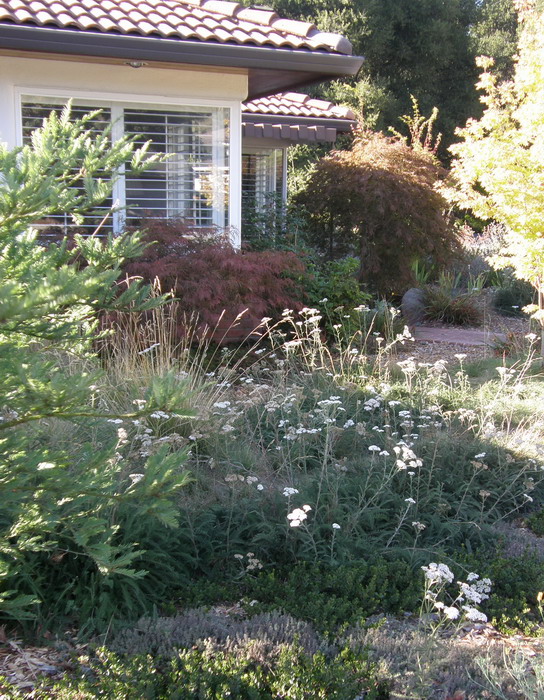
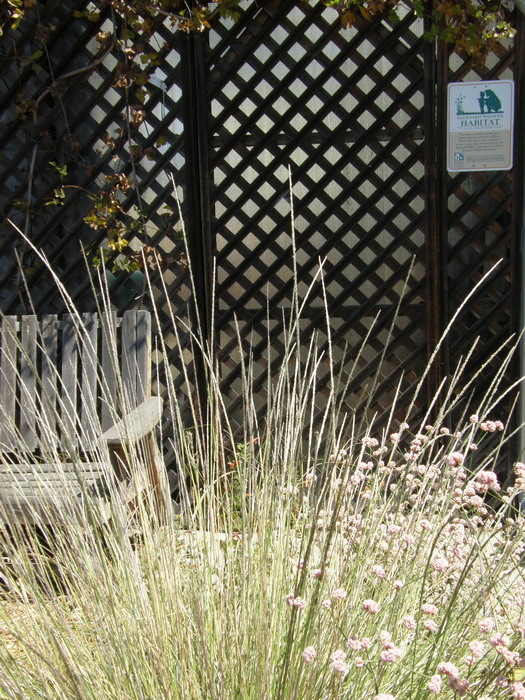
One basic step is avoiding pollution in the first place with tough plants that require little or no fertilizer, pesticides, or herbicides.
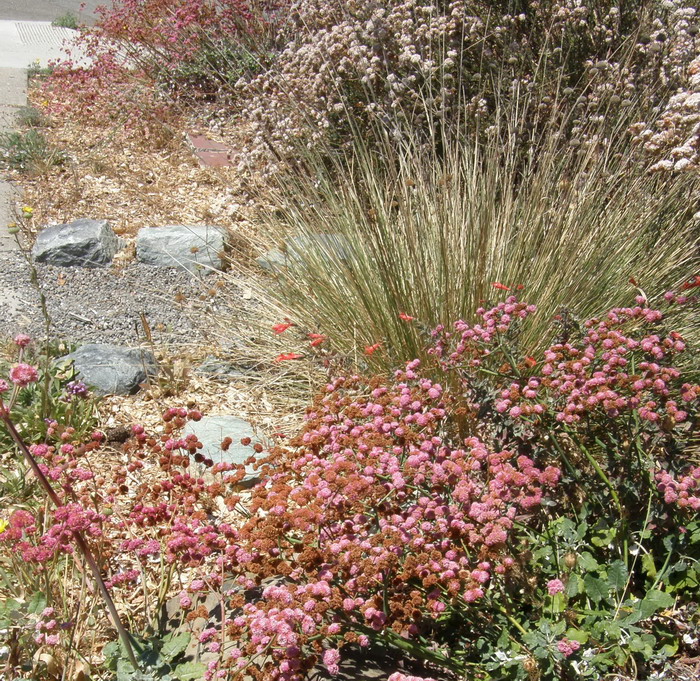
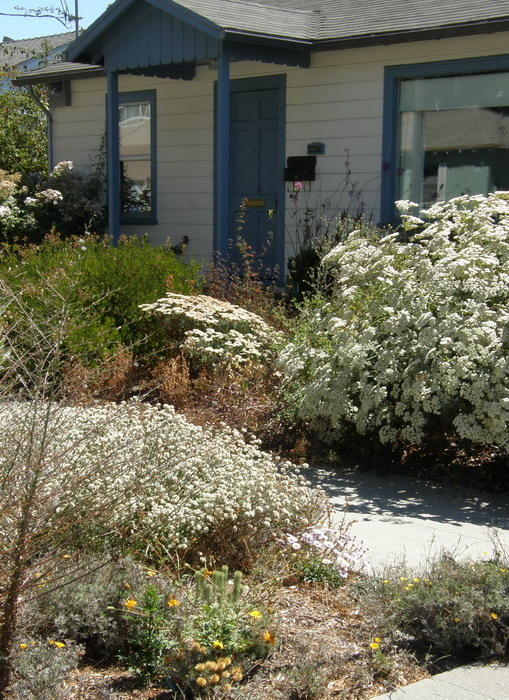
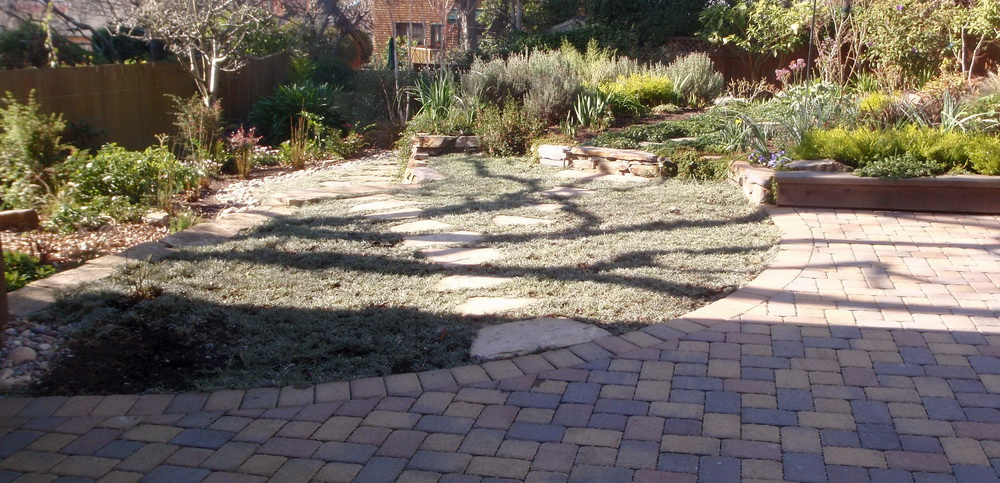
Drought-tolerant plants, like the California native plants above and below, save water in dry periods. Less irrigation means less chloramines flowing to storm drains and creeks. Chloramines, used to make drinking water safe for humans, are toxic to aquatic life.
Gardens that are deeply dug, densely planted, and heavily mulched trap rain and slow down peak flows of storms.
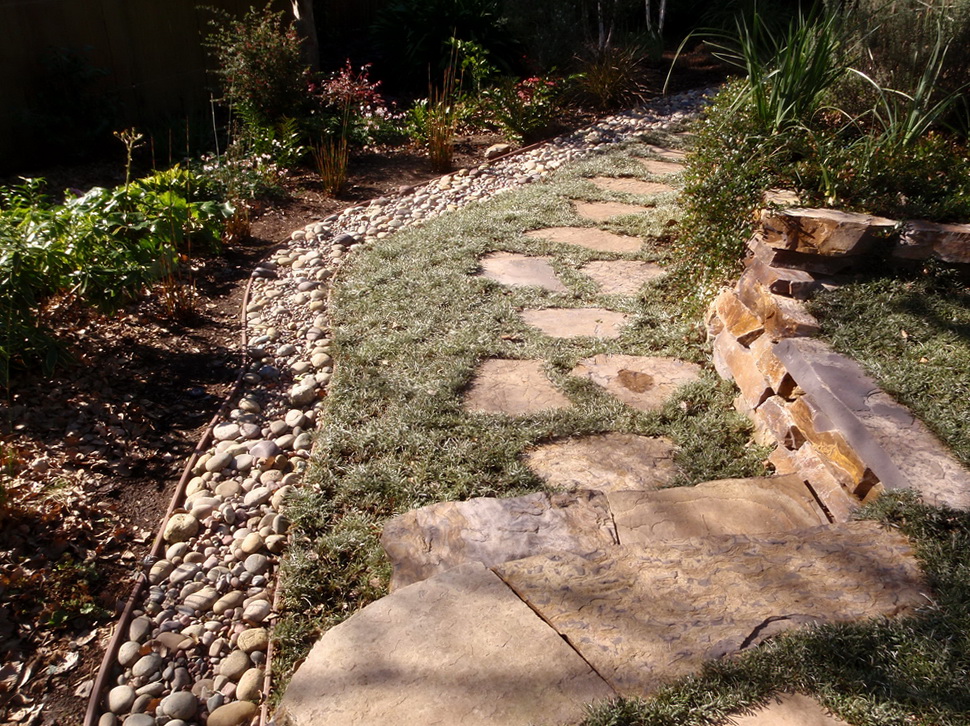
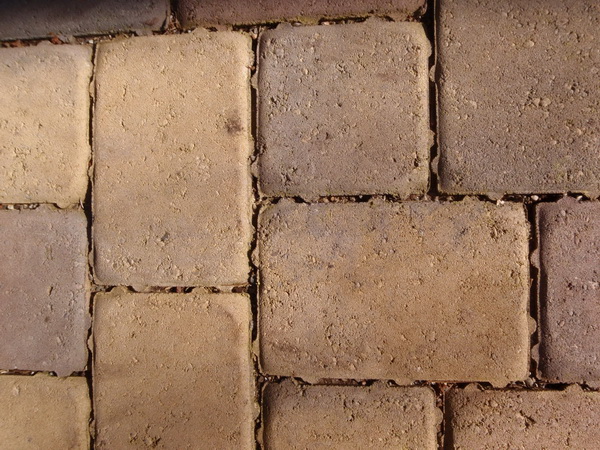
Below: When remodeling expanded this home’s footprint, the back garden was redesigned to keep increased runoff from affecting neighbors downhill. The combined driveway and patio has permeable pavers over a deep layer of gravel that acts as a detention basin. Below left: Farther downhill, runoff flows in a perforated pipe hidden under cobbles. In high flows, the water bubbles up into the “stream.” Little reaches the lot downhill. Below right: detail of spaced pavers.
With attention to soil type, slope, and drainage, many homes can have swales or let roof leaders drain into landscaping. See photos in other pages under Dense Housing and Single Family Housing, particularly Livermore: Charlotte Ave. area and Pleasant Hill and Fremont Townhouses.