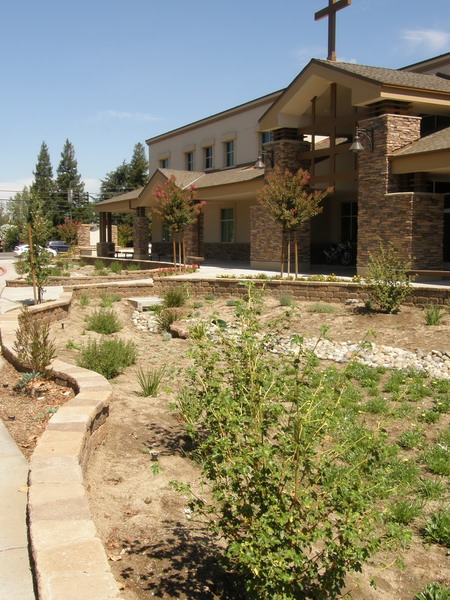
BIORETENTION — “RAIN GARDENS”
“Bioretention” is a broad term. “Rain garden” is still broader. Indexed here are projects with relatively small depressed areas designed to retain water for a short time in order to slow down and reduce storm runoff peaks, as well as reduce pollution. A common slogan is “slow it, spread it, sink it.”
Keeping a runoff pattern reasonably similar to what existed before development generally requires some 3-5% of the project area, as well as excavation and plumbing: Raised drains to prevent flooding, underdrains to carry heavy flows to storm drains, and layers of crushed rock and highly permeable soil.
Not indexed here are (a) larger ponds or (b) projects with bioretention areas that are a relatively small part of a more complex system. Large parking areas, for example, often have both elongated swales and small corner bioretention areas.
Click on the thumbnail to see a larger photo.
Click on the text to see the page on the project.
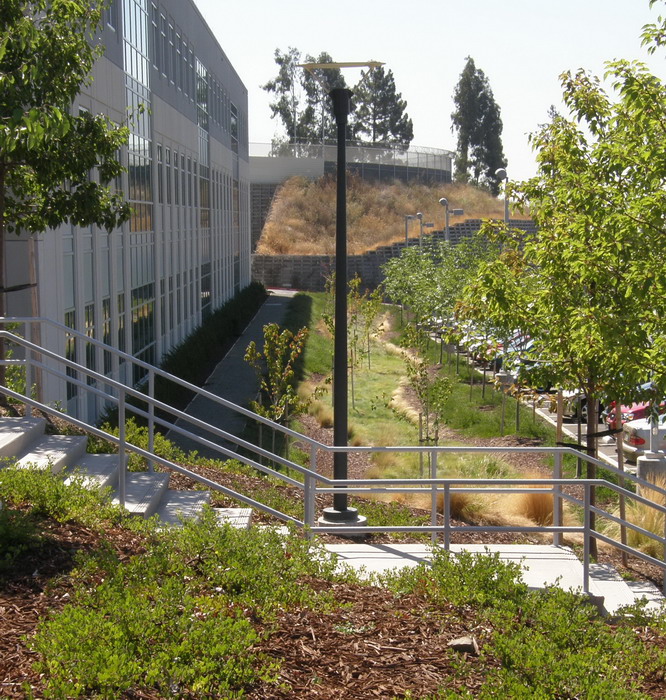
Alameda County Juvenile Justice Center
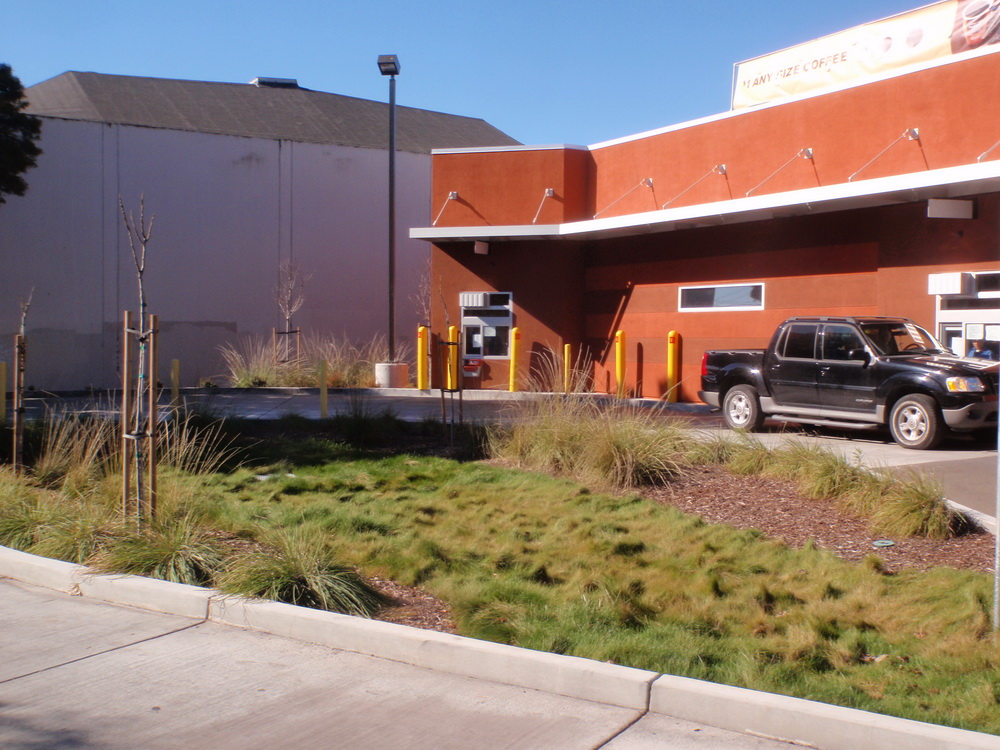
Berkeley: McDonald’s
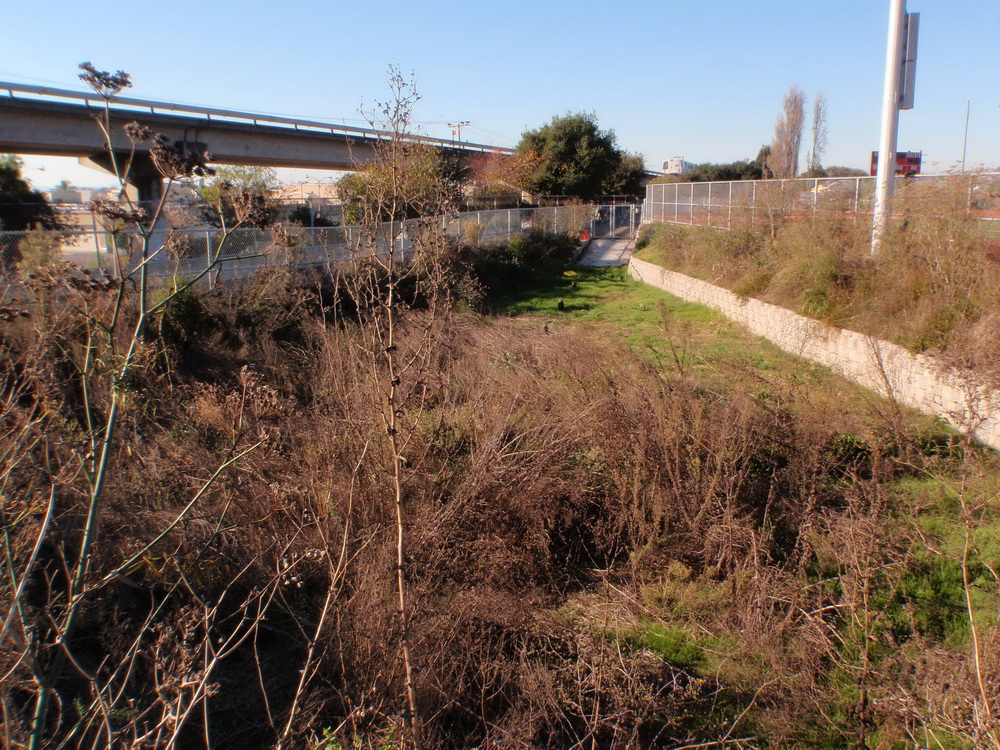 Albany School District’s Cougar Field
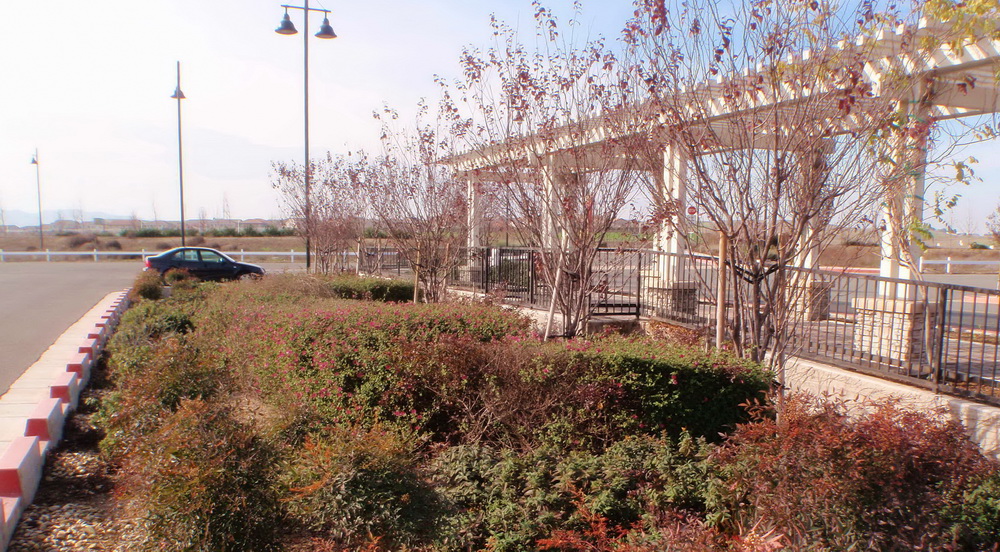 Penney’s, Antioch; Lowes, Concord
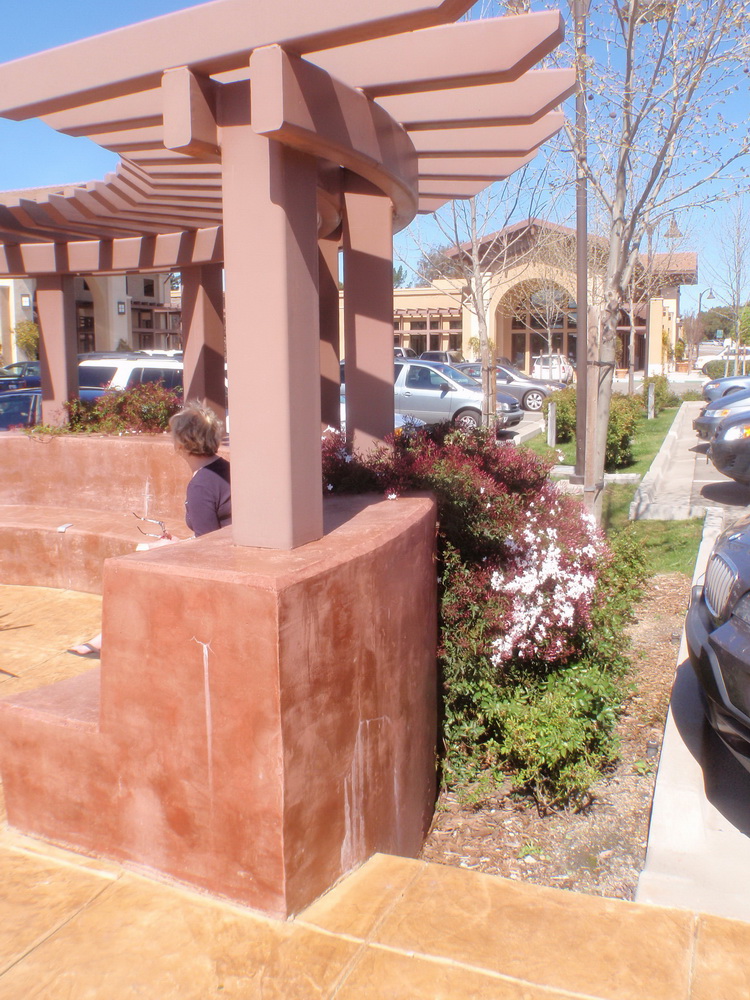
Danville:
Rose Garden
shopping center
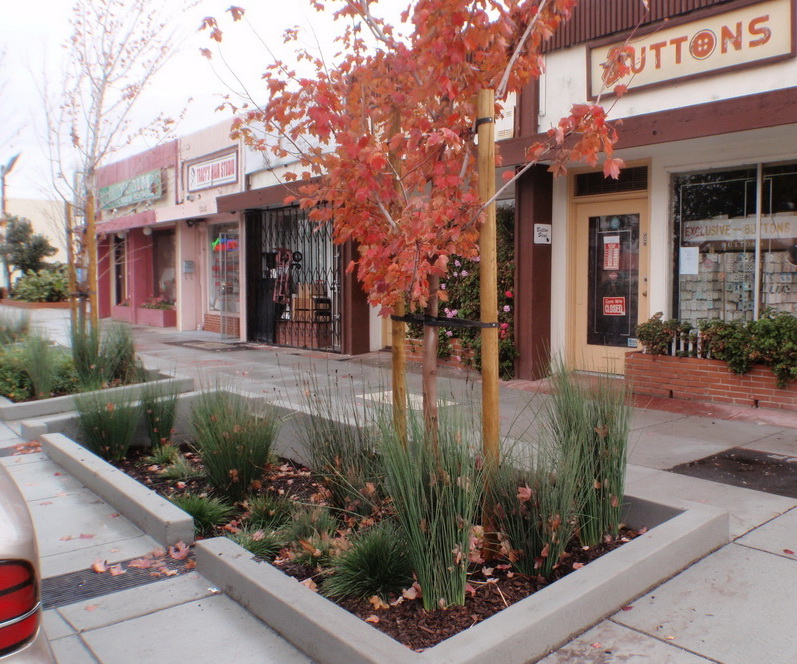
El Cerrito Sidewalk Rain Gardens
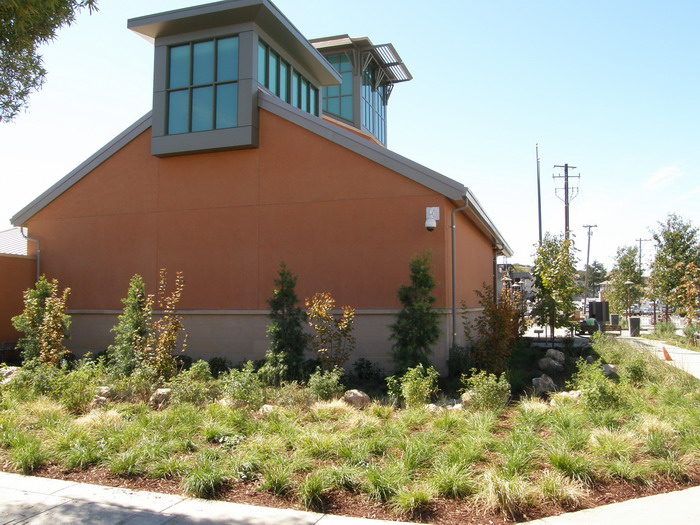
El Cerrito City Hall
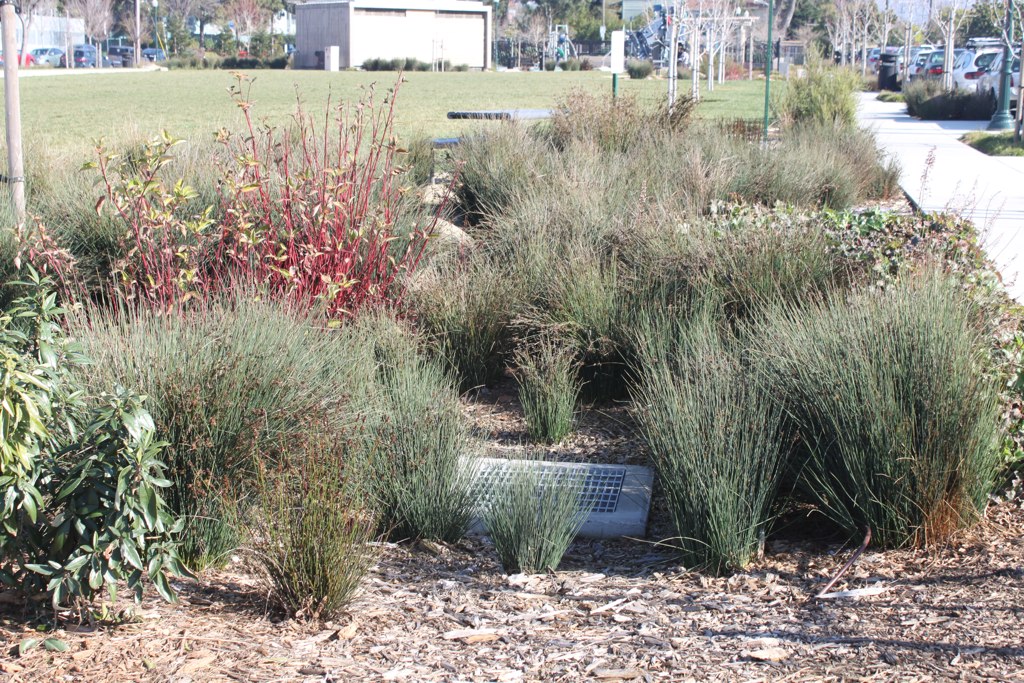
Emeryville: Doyle-Hollis Park
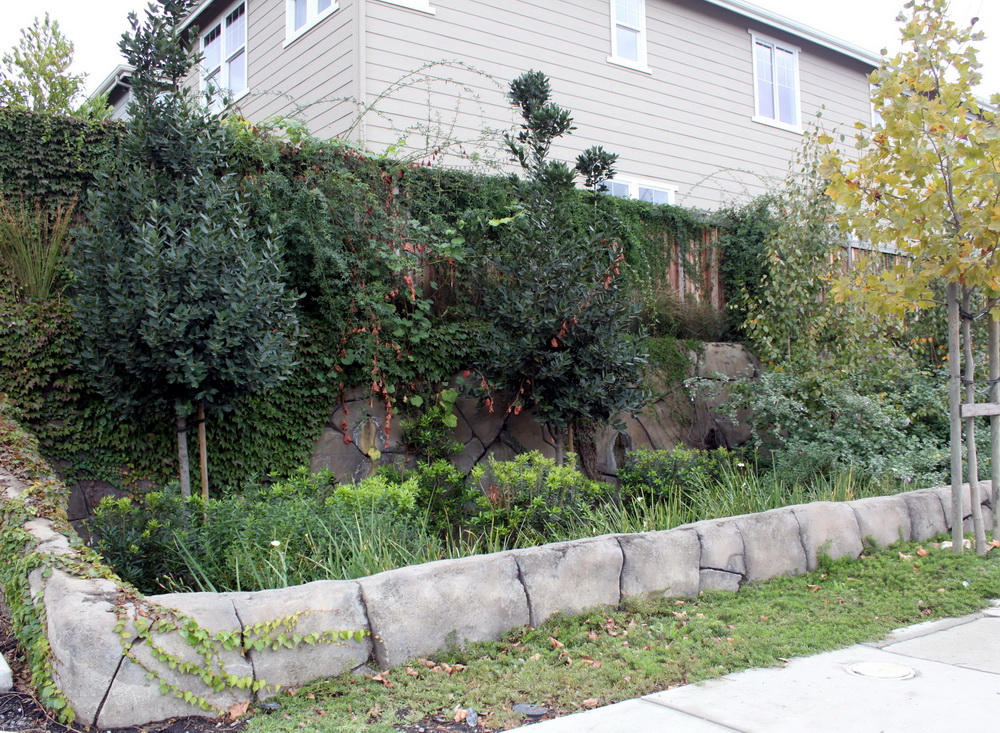
Martinez: Slowing runoff on a slope
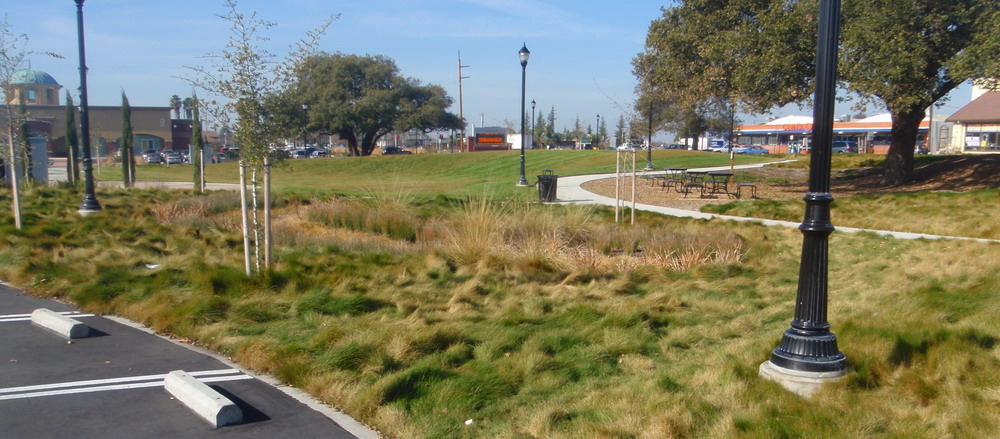
Oakley City Hall

Pittsburg City Hall and Richard E. Arnason Justice Center
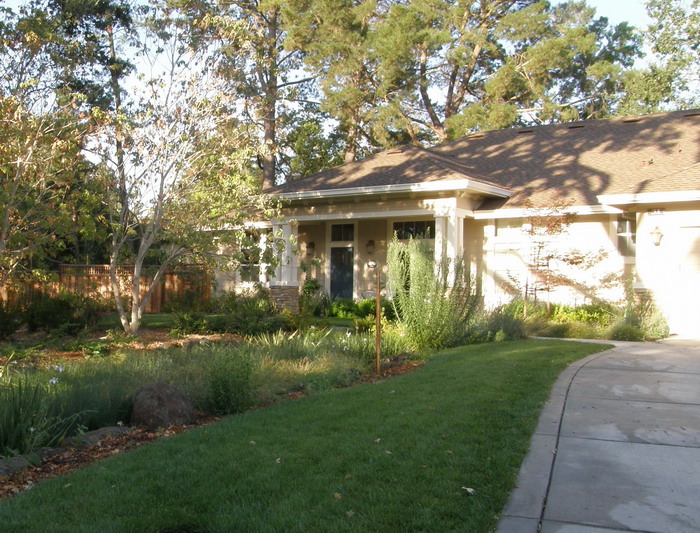
Pleasant Hill: Hidden Creek
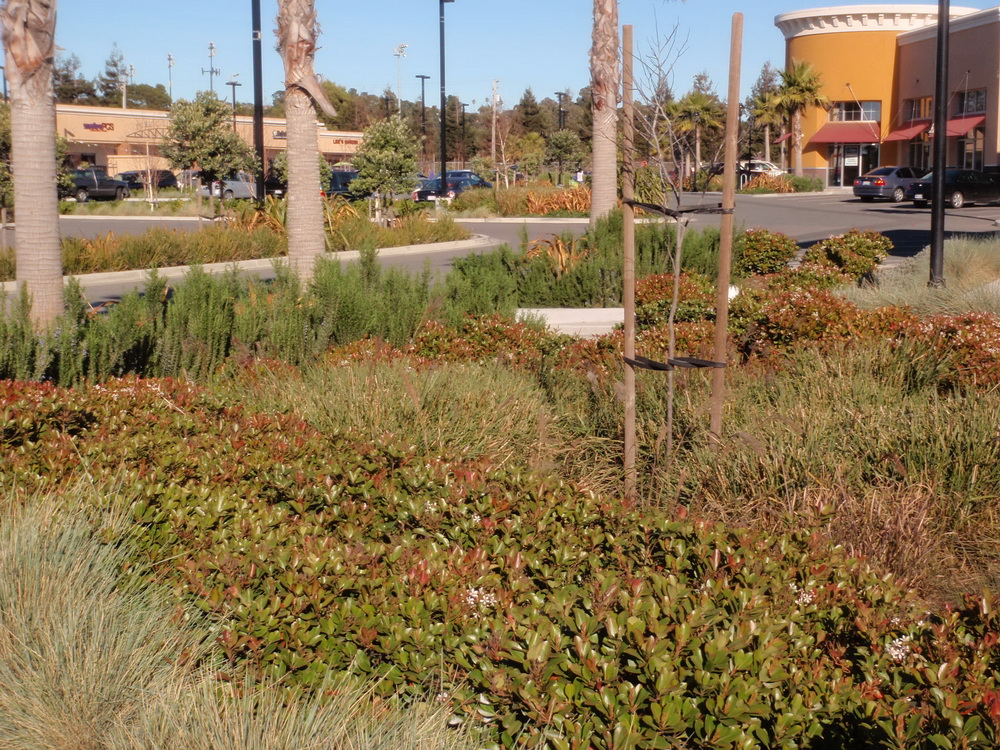
San Pablo: Shopping area at El Portal Drive and San Pablo Avenue
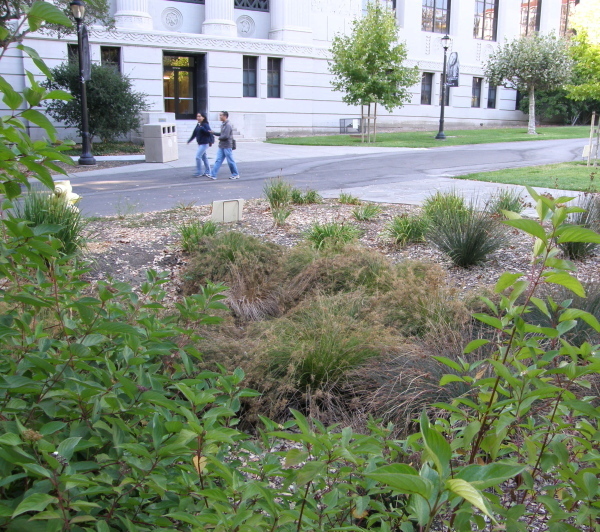
UC Berkeley: Grinnell Glade
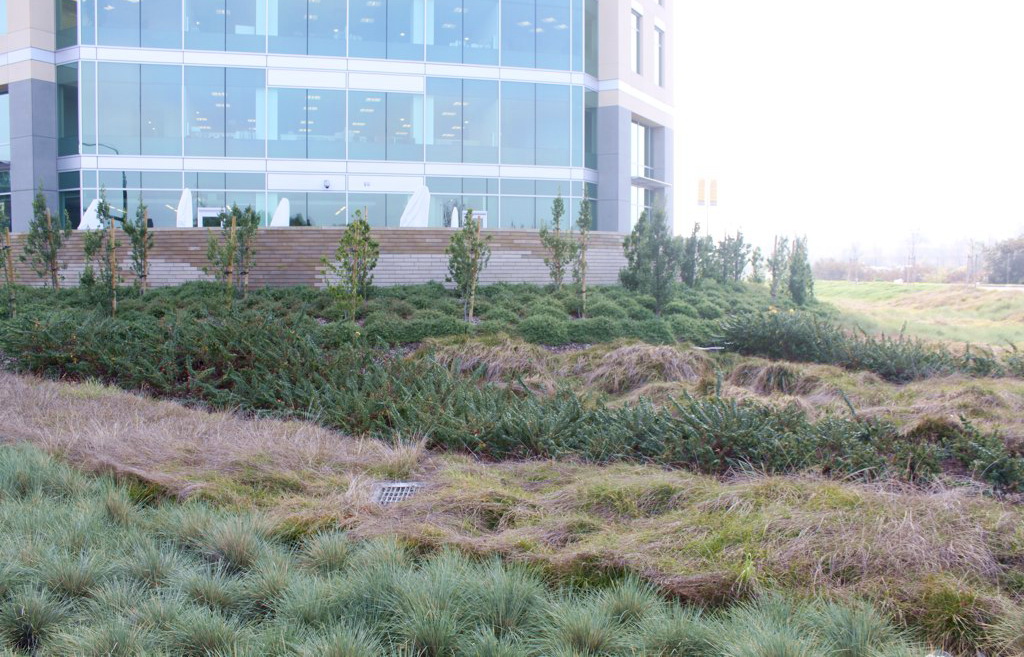
Walnut Creek: AAA and Varian Headquarters
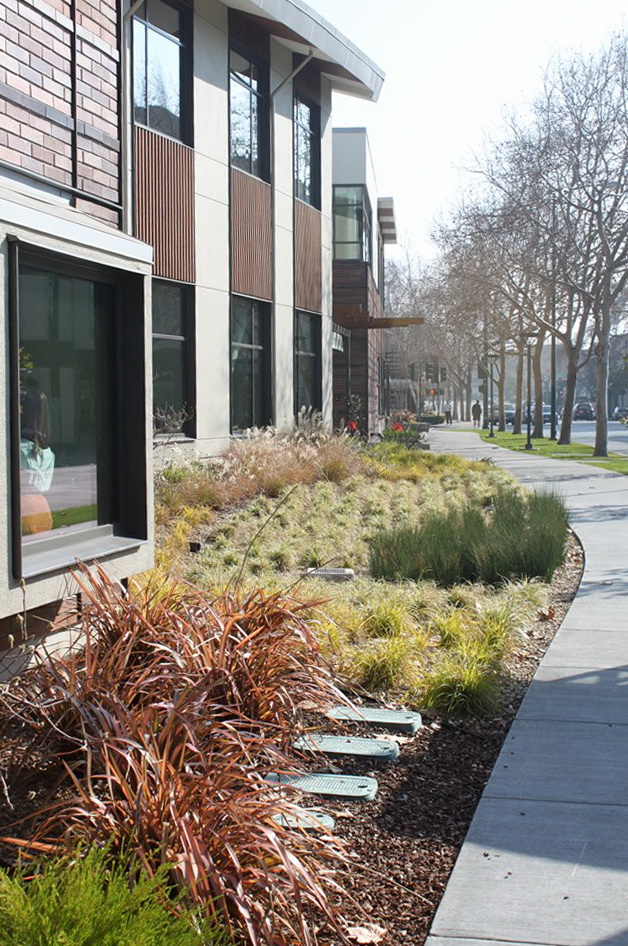
Walnut Creek Downtown Public Library